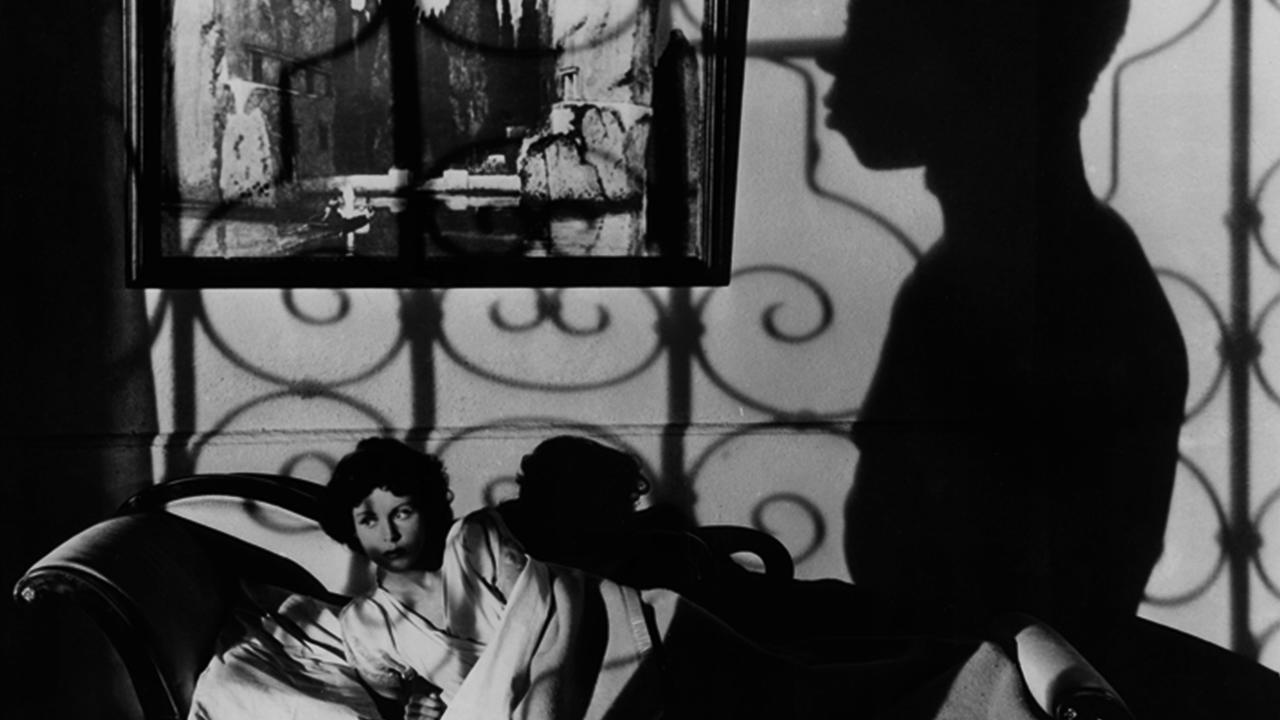
Besides watching 2018’s new releases, I also watched a number of older motion pictures – ten of which captured my attention, more so than any others.
No. 1: The Swimmer (1968)

John Cheever’s “The Swimmer” is the kind of source material you would be tempted to call “unfilmable,” but that’s not the case here. The movie’s episodic structure, with each swimming pool representing a part of Merrill’s life, makes it easier to track Merrill’s gradual weariness, which Lancaster conveys convincingly in his performance.
One of the most striking parts of the movie, though, is its editing style: all the frequent cuts to eyes, sunlight, trees, the ground, feet, hands, leaves, mushrooms, flowers and more make it abundantly clear Merrill is ignorant of the life he’s rushing through.
Screenwriter: Eleanor Perry / Director: Frank Perry (her husband)
No. 2: World on a Wire (Welt am Draht, 1973)

Watch for three hours of inhabiting the paranoia of a virtual reality program designer who begins to suspect he’s also living in a virtual reality. It’s more fun than it sounds.
Two qualifications: 1) Because of the movie’s subject, the use of reflection is understandable even if it’s a little too, well, cute; and 2) I can’t figure out whether the over-exposed picture was purposeful or simply a distracting mistake.
No. 3: Wake in Fright (1971)

“Who having known the righteous judgment of God, that those who practice such things are worthy of death, not only do them but also take delight in those practicing them.”
No. 4: The Andromeda Strain (1971)

Much of this movie’s pleasures derive from its disciplined editing style and the procedural narrative: characters calmly explaining the risk of pandemic, or undergoing decontamination processes for six minutes of screentime, or the thrill of scientists trying to ascertain the nature of a foreign material, how a computer system works, &c.
The movie was shot on an Arriflex D-20, and the lighting and image quality is terrific. Go for the Blu-Ray on this one. Half of the movie was shot with a diopter lens, and yet it’s never distracting.
“Andromeda Strain” and Tarkovsky’s “Stalker” top the list of movies that are so boring they’re thrilling.
No. 5: The Ninth Configuration (1980)

I’m really not sure how to sum up this movie. After the Vietnam War, the government sends Col. Kane to treat several former military personnel for mental disorders at a large castle. During Kane’s stay there, he engages with one patient, a former astronaut, and the pair debate the existence of God and the divine purpose of self-sacrifice. It’s wild, disturbing, and brought me to tears at more than one point.
Blatty’s “Ninth Configuration” is one of the few cases where a movie’s ambitions are sufficient to overlook its technical errors and narrative failures. If the sound mixing had been given just a little more attention, the movie would be an overwhelming experience, which it very nearly is.
No. 6: One Eyed Jacks (1961)

Brando’s “One-Eyed Jacks” was once believed to be lost, but it has undergone a beautiful restoration by Criterion Collection.
In “One-Eyed Jacks,” two criminals are split up after a bank robbery, with “Dad” Longworth (Karl Malden) abandoning Rio (Brando) and using their stolen loot to become the sheriff in California. Several years later, Rio escapes prison and shows up in Dad’s town, leaving Dad to wonder whether Rio is seeking revenge.
In my mind, the only Western movies to rival “One-Eyed Jacks” in lighting, shot composition and editing are Howard Hawks’ “Rio Bravo” and Sergio Leone’s “Once Upon a Time in the West.”
No. 7: Creator (1985)

“Creator,” which was written by Jeremy Leven, is obviously an adaptation of a novel (also by Leven), because of how densely it’s packed with material: an eccentric inventor whose housekeeper grunts; a pre-med student who has a house robot that talks to him and zaps his bed rails if he doesn’t wake up on time; one character’s coma; a competitive university colleague who tries to steal Wolper’s grad assistants and funding; a young woman hired to donate her ovaries to a cloning project though she’s jealous of the project and wishes the professor would marry her; as well as thoughtful sequences about death and fatherhood.
It’s also the funniest movie I watched all year.
No. 8: I Walked with a Zombie (1943)

Jacques Tourneur, who is best known for his low-budget or B-movies, is an underrated master of cinema. He’s one of my favorite filmmakers, and each year I try to watch at least a couple of his motion pictures. “I Walked with a Zombie” was made decades before Romero’s rotting corpses redefined “zombie,” and Tourneur’s horror picture accomplishes most of its scares through shadows and diegetic music and surprising sound effects.
No. 9: Von Ryan’s Express (1965)

The successor of “Bridge on the River Kwai” (1957) and the precursor of “The Dirty Dozen” (1967), with Sinatra playing a colonel at a POW camp in Italy who must earn the respect of his men while spearheading an escape by train from Axis foes.
Col. Ryan’s escape doesn’t always go to plan, and doubt grows among his officers about his fitness to command. Though it’s more of an action picture than either of the two war movies mentioned above, “Von Ryan’s Express” views the taking of human life, even in war time, as a tragic loss.
No. 10: The Hit (1985)

Stephen Frears’ “The Hit” follows Willie Parker (Stamp), ten years after Parker became a cooperating witness for the government in a case against some of his former partners in crime. Braddock (Hurt) and a young hit man played by Tim Roth capture Willie Parker and a young woman, escorting them to a place where Willie Parker can be executed.
Willie Parker appears resolved as he approaches death. He doesn’t run. He doesn’t try to resist his executioners. How can he remain so calm? How do people react when they know they’re going to die?
